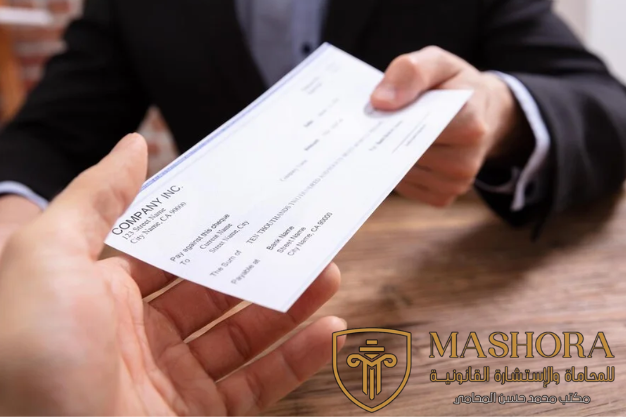
Cheques are among the most commonly used instruments in financial and commercial transactions in Egypt. They are relied upon as a method of payment or as a guarantee for fulfilling certain obligations. However, many people confuse guarantee cheques with commercial cheques, despite the important legal differences between them that may affect rights and obligations.
Understanding the difference between both types helps individuals and companies avoid legal disputes and risks resulting from issuing cheques incorrectly.
Table Of Content
What Is a Cheque Under Egyptian Law?
A cheque is a written instrument containing an order issued by the drawer to the bank (the drawee) to pay a specific amount of money to the beneficiary upon presentation, according to the legal rules governing cheques.
Cheques are commonly used for:
- Paying debts
- Commercial transactions
- Guaranteeing the fulfillment of obligations
- Facilitating financial transactions
First: What Is a Commercial Cheque?
A commercial cheque is a cheque issued for the purpose of settling an existing financial obligation. In other words, it represents an actual payment method in exchange for:
- Sale of goods or services
- Commercial transactions
- Payment of outstanding debts
- Existing financial obligations
Example:
A company purchases goods from another company, and they agree that payment will be made through a cheque on a specific date. In this case, the cheque is considered a payment instrument for the debt.
Characteristics of a Commercial Cheque
A commercial cheque is characterized by:
- Being connected to a real financial transaction
- Being used as a payment method
- Representing an existing financial obligation
- Allowing the beneficiary to claim its value if payment is refused
Second: What Is a Guarantee Cheque?
A guarantee cheque is a cheque issued for the purpose of securing the performance of a future obligation or ensuring compliance with a specific agreement, rather than making an immediate payment.
It is commonly used in:
- Construction contracts
- Supply agreements
- Lease agreements
- Commercial agreements
Example:
A party provides a cheque to guarantee the fulfillment of its obligations under a contract, not because it already owes the cheque amount at the time of issuance.
Is a Guarantee Cheque Legal in Egypt?
Guarantee cheques are considered one of the topics that frequently lead to legal disputes, because using a cheque as a guarantee rather than as a payment instrument may create problems when presenting it to the bank or when a dispute arises between the parties.
Therefore, they must be handled carefully, especially when issuing cheques for large amounts or without clearly specifying the reason for issuance.
Difference Between a Commercial Cheque and a Guarantee Cheque
|
Comparison |
Commercial Cheque |
Guarantee Cheque |
|
Purpose |
Payment of an existing financial obligation |
Guaranteeing the performance of an obligation |
|
Reason for issuance |
Existing debt or transaction |
Future obligation or agreement |
|
Use |
Payment instrument |
Security instrument |
|
Nature of dispute |
Claiming payment of the amount |
Dispute regarding the reason behind issuing the cheque |
|
Risks |
Lower when linked to a clear transaction |
Higher due to possible disputes |
What Happens If a Cheque Is Not Honored?
If the bank refuses to cash the cheque due to:
- Insufficient funds
- Account closure
- Other legal reasons
Legal procedures may follow depending on the type of cheque and the circumstances surrounding it.
Therefore, identifying the nature of the cheque and the related documents is essential when handling any dispute.
The Role of a Lawyer in Cheque Cases
A commercial and financial disputes lawyer can assist with:
- Reviewing the legal status of the cheque
- Determining the nature of the relationship between the parties
- Examining contracts and related documents
- Taking appropriate legal action to recover rights
- Defending clients in cheque-related cases
- Negotiating suitable settlements
How to Avoid Cheque Problems?
To reduce legal risks:
- Do not sign cheques without understanding the reason for issuance
- Keep all contracts and documents related to the cheque
- Avoid leaving cheque details incomplete
- Consult a lawyer before issuing or receiving high-value cheques
Why Do You Need Legal Consultation?
Cheque disputes do not depend only on the existence of the cheque, but also on:
- The reason it was issued
- The legal relationship between the parties
- Supporting documents
- The way the cheque was used
Any mistake in handling cheques may lead to lengthy legal disputes.
Why Choose Mashora Law Firm?
Mashora Law Firm provides specialized legal services in:
- Commercial cases
- Financial disputes
- Cheque-related cases
- Contract and agreement review
- Commercial dispute resolution
The legal team works to protect clients’ rights and achieve the most effective legal solutions.
Conclusion
The difference between a guarantee cheque and a commercial cheque is not just a difference in usage, but a difference in purpose and legal consequences.
Before issuing or accepting any cheque, it is important to understand the nature of the obligation connected to it to avoid disputes and protect your rights.
For legal consultation regarding cheque cases or commercial disputes, contact Mashora Law Firm and its legal advisory team.
Booking and Contact
To book an online consultation or submit documents for an initial assessment, you can use 👉Contact page
Or for WhatsApp consultations: https://wa.me/+201009904404
You can also visit the services section for more information about the specializations: 👉Legal Services